
A Brief History to Western Art Music
The Baroque Period (1600-1750)

A painting of a Baroque Orchestra (by John Theodore Harris)
Source: http://www.ballet.utah.edu/ballet4410/images/figure83.jpg
During the Baroque period, artists saw music as a multifaceted art form, subordinated to words and serving only as a musical means to a dramatic end. It was the first time in history where there were a diversity in musical style as previously in the Renaissance and Medieval eras, music were autonomous, focusing on secular music. Composers created tonality and embraced the use of ornamentation, creating a set of musical 'laws' which would carry on to the Classical period; its successor. Many terms from the Baroque period are still used today in modern music.Key Characteristics
- Introduction of the 'Diatonic System' (Major and Minor Tonality)
- Turbulent yet controlled rhythms
- Expressive melodic lines usually based on a single theme which is then expanded through mono-thematic development (often using imitation, augmentation and inversions of the original theme or motif).
- Emphasis on melodic embellishments, especially in keyboard and vocal music.
- Dissonance was permitted for the first time, although any dissonance was expected to resolve to consonance.
Key Composers
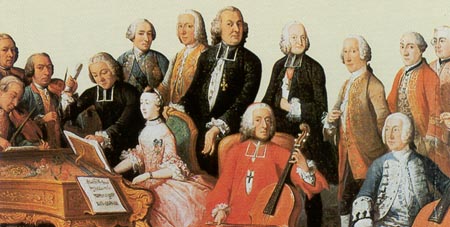
The Baroque Artists
Image Source: http://www.dovesong.com/images/MP3/Baroque%20Page.jpg
- Johann Sebastian Bach (1685 - 1750)

A portrait of the 61 year old Bach
Image Source: https://upload.wikimedia.org/wikipedia/commons/6/6a/Johann_Sebastian_Bach.jpg
Johann Sebastian Bach is without a doubt the face of the Baroque Period. Credited for being one of the Baroque composers who advanced the style to its apex, Bach's music is revered for its technical command, artistry and intellectual depth. An extremely talented organist in his lifetime, today he is considered to be one of greatest composers of all time due to his pieces such as his Brandenburg Concertos and over three hundred cantatas.
Bach's Brandenburg Concerto No. 3 in G Major, BMV 1048
- George Frideric Handel (1685 - 1759)
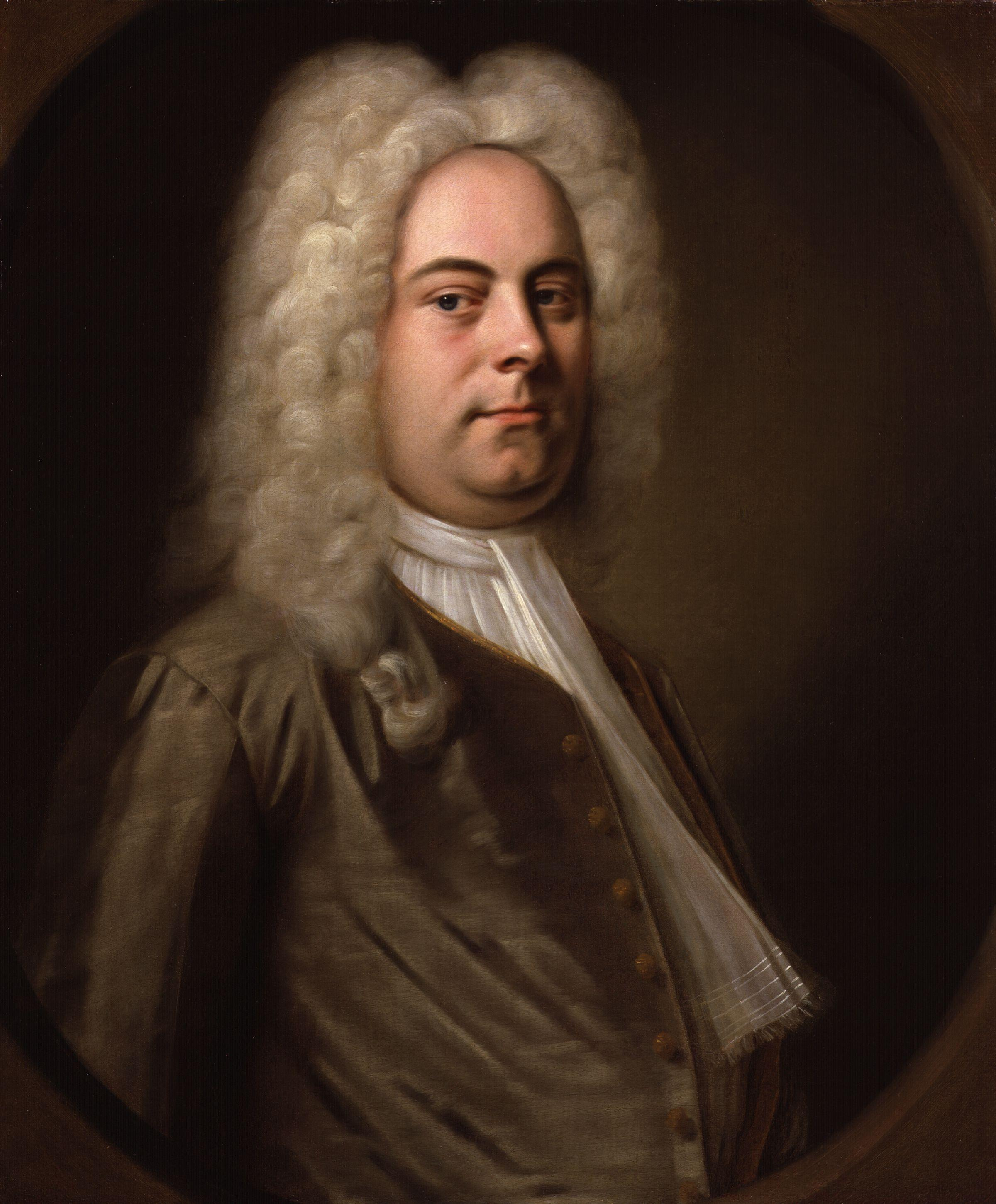
A portrait of Handel by Balthasar Denner
Source: https://upload.wikimedia.org/wikipedia/commons/f/fa/George_Frideric_Handel_by_Balthasar_Denner.jpg
Handel's Zadok the Priest
- Antonio Vivaldi (1678 - 1741)

A portrait of Vivaldi.
Image source: http://www.bach-cantatas.com/Pic-Lib-BIG/Vivaldi-Antonio-01.jpg
Antonio Vivaldi was a virtuoso violinist known best for his concertos, in particularly his concertos for the violin. Vivaldi's style and structuring of his works was such that Vivaldi had a profound influence on Bach as a composer. Vivaldi is most famous for the anthropology of violin concertos, 'Four Seasons'.
Vivaldi's Four Seasons (Winter). Winter is undoubtedly the most famous of the four violin concertos.
Closing Thoughts
Over the years of being the pianist, the pieces of the Baroque period were a constant struggle. As an performer, I've always firmly believed that each individual performer develops their own personal interpretation of a piece with their performance. Quite often, most Baroque pieces I was required to perform for exams were technically demanding and I end up viewing it as a 'Study'. As such, I never quite manage to develop an interpretation of my own in which I am satisfied. I believe this is not because the music is 'dated' but rather I am unable to relate to notions of the composer and the music.
Beyond my personal dislike of performing Baroque pieces (mainly credited to unpleasant experiences with examinations), I simply cannot help but appreciate a good interpretation of the Baroque works; the grandiose feeling which I'd probably describe as walking into a cathedral.
Next: The Classical Period.
Post by Wing


0 comments:
Post a Comment